

The Ultimate Guide to Proper Restaurant Management
Are you a new manager or restaurant owner? Or do you want to improve your restaurant management skills? Then you’re on the right track!
There is no other feeling like running a high-quality restaurant and pleasing customers.
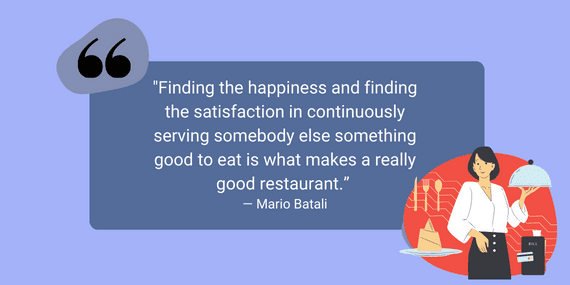
Our blog will share valuable tips and tricks for properly managing your restaurant. Read below to learn more!
1. Follow Restaurant Laws and Regulations
2. Increase Employee Retention in Your Restaurant

However, that doesn’t mean you should keep employees who aren’t performing well. If you keep employees who exploit your support, other staff members who perform well will want to leave.
3. Show Your Appreciation to Your Staff 🧑🍳
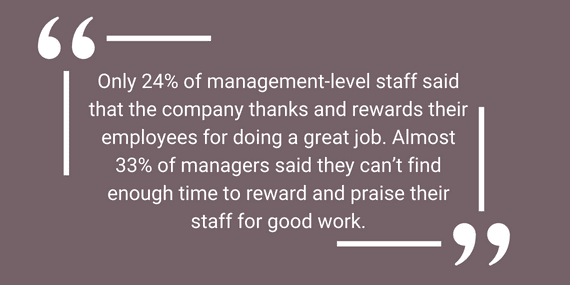
Source: Reward Gateway
Employees don’t quit the job, they quit the management; this is true most of the time. That’s why showing your employees that they matter is crucial so they’ll be glad to stay in your restaurant. More companies need to give more recognition to their employees’ hard work, as evidenced by a survey we found. A survey by Reward Gateway found that only 24% of management-level staff said that the company thanks and rewards their employees for doing a great job. In the same survey, almost 33% of managers said they can’t find enough time to reward and praise their staff for good work. You can show employees your appreciation by giving credit and rewards. A few examples of credit and rewards include:- Give a reward to the “Best Employee of the Month.”
- Offer cash, gift cards, or other rewards that they will appreciate.
- Provide free meals to your staff that worked overtime or celebrated special occasions.
4. Train Your Staff to Be Proactive in the Restaurant
Since customers believe they are always right, you and your staff should know how to deal with them during stressful situations.
There would be rude and demanding customers, people with dietary restrictions, and others who might be hard to deal with. That’s why you need to train your employees to prepare for various situations that may arise.
All your employees should be able to get on the right foot with customers immediately, gaining confidence in their customer service level.

5. Properly Arrange Staff Scheduling to Avoid Understaffing
6. Allow Room for Restaurant Employees to Develop 🧠
Some employees leave the business when they don’t see any room for growth. That’s why showing and guiding them on a path to growing their career is vital.
You should provide them with training, discuss career growth requirements and goals, and promote them internally instead of hiring someone else for higher positions. Your staff may stick around for a long time when you do those things.
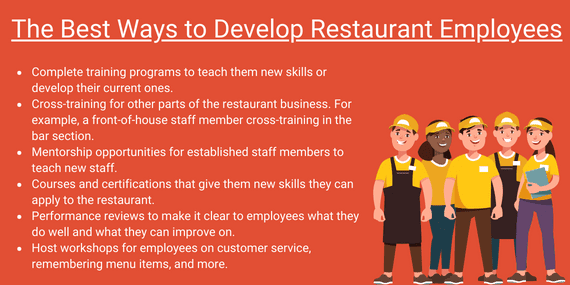
Here are some specific things you can do to allow your restaurant employees to develop.
7. Set Clear Expectations for New Restaurant Staff
When onboarding new staff, inform them of the required duties and responsibilities.
You shouldn’t expect your employees to do everything in your restaurant. So, you should assign tasks depending on their position. In this way, you will avoid confusion, making it easier for them to do their job better.
8. Maintain an Excellent Quality Menu 🍲
The two pillars of an excellent restaurant are the experience and the food. While there are many ways to impact the experience, mainly involving staff management, you must also ensure the food is fantastic.
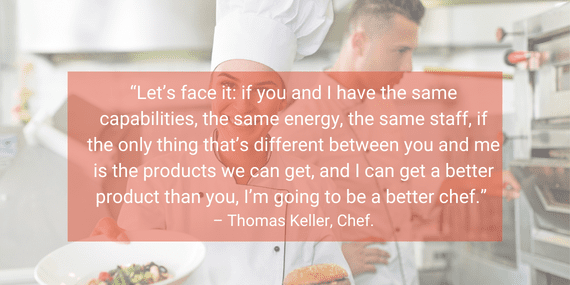
One thing you must do is ensure that you can consistently source the freshest and highest quality ingredients. If you have an excellent chef, but the ingredient quality is poor, there’s not much the chef can do to turn it into a brilliant plate of food.
Sourcing the freshest ingredients involves allowing chefs to go to the markets as early as possible to get first pick. For anything you need to order online, research it heavily to find high-quality products.
You must also check in with the chefs regularly to ensure they maintain menu item consistency. When you are in a repetitive routine, it can be tempting to cut corners.
Finally, you should get customer feedback and use it to determine if there are any dishes they don’t like. Pair this with the sales data to make updates to the menu.
9. Invest in Marketing for Restaurants
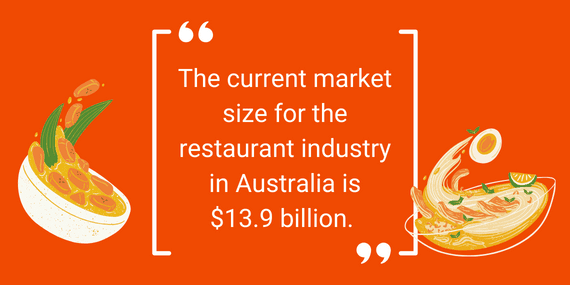
Source: IBIS World
Additionally, you should constantly monitor for trends in the restaurant industry. If you fall behind, other businesses with modern sensibilities and great food will take your customers.
Also, consider creating a loyalty program for loyal customers where they can get discounts and free items.
10. Enhance the Customers’ Experience in the Restaurant
Besides employees, customers are another lifeline of restaurants. And most consumers visit restaurants for the experience. So, make it count.
You’re not just serving them food, you are serving them memories.
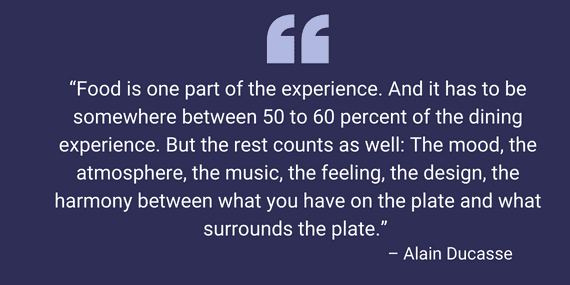
Because of this, it’s essential to give them a pleasing ambiance, a clean area, and friendly employees. Because when you give them a great customer experience, they might return for more!
11. Monitor Customer Reviews of the Food and Service
Reviews can make or break your restaurant. We found an Invespcro survey that states that 31% of customers will commit to spending more money at a business with excellent customer reviews.
Word of mouth and online reviews significantly affect a person’s decision to visit your place, so you must monitor them.
Ensure you give your customers a positive experience so they’ll share your business with their family and friends. Thank people who gave you positive reviews, and apologize to those who gave your restaurant negative reviews.
Tell them you’re doing your best to improve your products and services. Also, if the negative review is vague, send them an email to ask them to clarify what the restaurant can improve on.
12. Host Events at the Restaurant
If your restaurant is new or you haven’t tried hosting an event yet, you should try it! Provide discounts to the first ones who will book your restaurant for an event or send a gift card for a referral that pushes through.
You can display the event’s photos on your website (with permission) so people will know that your restaurant is a great place to celebrate an event.
Researching what makes a great event and making all the necessary arrangements is essential. If people think you didn’t put much effort into the event, they may not return for another.

13. Have a Mentor with Experience in Restaurant Management
Experience is the best teacher, so you should find a mentor with many years of experience to help you.
They can provide restaurant management tips, advice, and tricks to help you manage your restaurant better. If you can’t find one, you should turn to books, articles, and other sources of information.
Here are some more reasons why you should consider a mentor with experience in restaurant management.
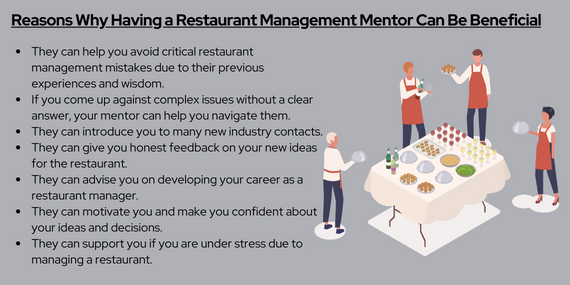
14. Manage Finances for the Restaurant 💰
If you don’t know how to manage your restaurant’s finances, it won’t make money. Managing this is just as important as all the other aspects of a restaurant, if not more so.
You need to have a comprehensive spreadsheet of all your outgoing costs. Without knowing how much you spend and how much you make, you won’t be able to see if your restaurant is profitable. Also, excellent inventory management is essential if you don’t want any of the food to spoil.
Also, you need to create perfect prices for every dish on the menu. It has to be fair for customers but make a profit for your business. If some dishes have more expensive ingredients, create some with cheaper ingredients and a higher markup to balance the profits.
Additionally, don’t do too much at once when you want to make expansions to your restaurant. If you overcommit, you may overspend and financially damage the business.
15. Utilize Technology Like Restaurant Management Software

Source: Fine Food Australia
Although you may prefer the old-fashioned methods, it is undeniable that automating a restaurant can speed up the processes and improve the customer experience.
Many restaurants in Australia are fully rolling out technology for payment, booking, and more.
A Fine Food Australia survey found that 50% of Australian restaurants are investing significant amounts in automating their kitchen. Furthermore, they found that 30% plan to automate their kitchen within the next six months.
Use every tool at your disposal to improve the customer’s experience, including technology. Specific systems like online reservation and POS systems can make the diner experience faster and easier.
16. Promote Diversity in the Restaurant
Our final point is to ensure that your team of restaurant staff is diverse in many ways. Doing this will help make the industry a kinder and more accepting place.
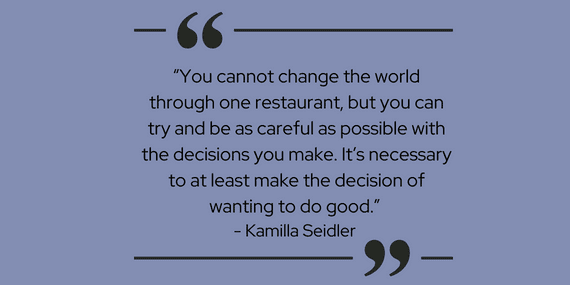
Additionally, your restaurant staff will be like a family, so you should want to make everyone there feel like a part of that family.
Diversity should run through every part of how you run your business, from the hiring process to how you and your staff treat people.
To get across Diversity, Equity, and Inclusion (DEI) in your restaurant effectively, update your policies and guidelines to reflect that you have a diverse hiring method and a zero-tolerance policy on discrimination in the workplace.
Final Thoughts on the Best Methods to Manage Your Restaurant
- The Ultimate Guide to Proper Restaurant Management
- 1. Follow Restaurant Laws and Regulations
- 2. Increase Employee Retention in Your Restaurant
- 3. Show Your Appreciation to Your Staff
- 4. Train Your Staff to Be Proactive in the Restaurant
- 5. Properly Arrange Staff Scheduling to Avoid Understaffing
- 6. Allow Room for Restaurant Employees to Develop
- 7. Set Clear Expectations for New Restaurant Staff
- 8. Maintain an Excellent Quality Menu
- 9. Invest in Marketing for Restaurants
- 10. Enhance the Customers’ Experience in the Restaurant
- 11.Monitor Customer Reviews of the Food and Service
- 12. Host Events at the Restaurant
- 13. Have a Mentor with Experience in Restaurant Management
- 14. Manage Finances for the Restaurant
- 15. Utilize Technology Like Restaurant Management Software
- 16. Promote Diversity in the Restaurant
- Final Thoughts on the Best Methods to Manage Your Restaurant




 USA
USA  AU
AU  UK
UK  ES
ES  FR
FR  BR
BR  TH
TH  IN
IN 